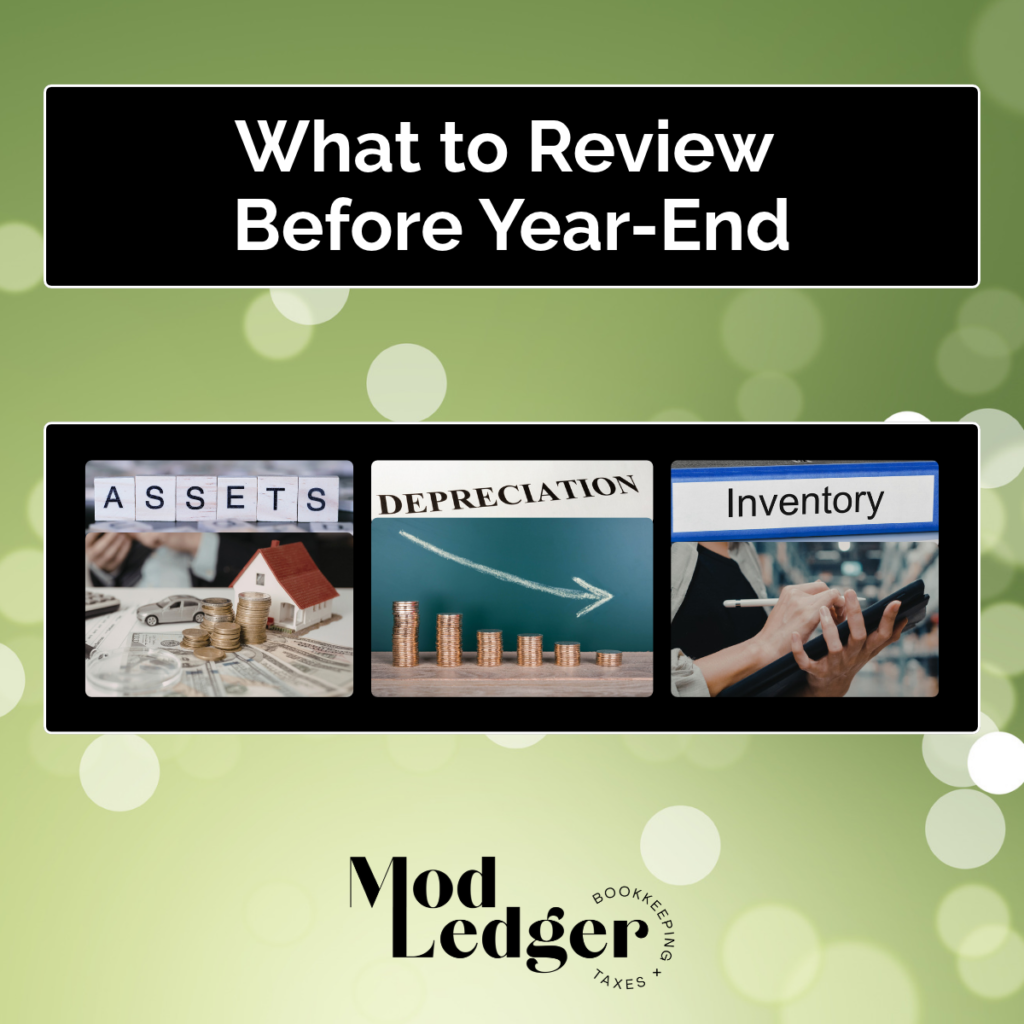
Inventory, Assets & Depreciation: What to Review Before Year-End
As the end of the year approaches, many small business owners focus on revenue totals and tax deadlines, but some of the most impactful financial reviews happen behind the scenes. Inventory, fixed assets and depreciation play a major role in how your business performance is reported and how much tax you ultimately pay. Ignoring these areas may lead to overstated profits, missed deductions and financial statements that don’t reflect reality. A year-end review gives you the opportunity to correct inaccuracies, strengthen your records and enter the new year with a more reliable financial foundation.
Reviewing Inventory: Accuracy Matters More Than You Think
If your business sells physical products, inventory is one of the most sensitive areas of your books. Even small errors can distort your cost of goods sold and taxable income. Start with a physical inventory count as close to year-end as possible. This step is essential – even if you use inventory software. Items can be lost, damaged, stolen, or miscounted throughout the year. Comparing your physical count to what’s recorded in your accounting system helps uncover discrepancies that need adjustment. While reviewing inventory, also evaluate quality and usability. Obsolete, expired, or damaged items should be written down or removed from inventory altogether. Holding onto inventory that can’t realistically be sold inflates your assets and gives a misleading picture of your business health. Finally, review how inventory costs are being tracked. Confirm that purchases, freight, and production costs are included correctly and that your inventory valuation method is applied consistently.
Fixed Assets: Confirm What You Own and What You Don’t
Fixed assets include items your business uses over multiple years, such as equipment, vehicles, furniture, computers, and machinery. These purchases are often large and mistakes in how they’re recorded can have long-term consequences. At year-end, review your fixed asset list and confirm that each item still exists and is actively used in the business. Assets that were sold, traded in, discarded, or no longer functional should be removed from your records. Keeping retired assets on the books can overstate business value and distort depreciation calculations. Also verify that new large purchases during the year were properly classified as assets rather than expenses. In our digital age – don’t forget non-tangible assets such as your website. While expensing items immediately may feel simpler, it can cause issues if capitalization was required. Proper classification ensures financial statements align with accounting standards and tax expectations.
Depreciation: Ensure It Reflects Reality
Depreciation spreads the cost of an asset over its useful life, but it’s not a “set it and forget it” process. Changes during the year can require adjustments.
Confirm that depreciation schedules are up to date and reflect:
- Assets placed into service during the year
- Assets removed or disposed of
- Correct useful lives and methods
If assets were used for both business and personal purposes, ensure depreciation is calculated based on the business-use percentage. This is especially important for vehicles and equipment that may be shared. It’s also worth reviewing whether depreciation elections made in prior years still align with your current business situation. While depreciation decisions are often made with tax planning in mind, errors or outdated assumptions can cause inconsistencies over time. This is a good understanding of what to review before year-end.
Understanding the Tax Impact
Inventory and depreciation directly affect taxable income. Higher inventory levels reduce cost of goods sold, increasing profit. Depreciation, on the other hand, reduces taxable income by spreading asset costs over time. If inventory counts are off or depreciation schedules are incorrect, your tax return may not accurately reflect your business performance. This can result in paying more tax than necessary, or raising red flags due to inconsistencies. A clean review before year-end allows your tax preparer to work with dependable numbers and reduces the risk of amendments or audits later.
Documentation and Recordkeeping
Strong documentation supports every number on your financial statements. As part of your year-end process:
- Retain purchase invoices for assets
- Keep inventory count worksheets or reports
- Document asset disposals and write-offs
Knowing what to review before year-end is half the battle. Organized records don’t just help with taxes; they also make it easier to secure financing, evaluate profitability, and respond to future questions about your business finances.
Planning Ahead for the New Year
Once reviews and adjustments are complete, take time to evaluate what you’ve learned.
- Are you holding too much inventory?
- Are assets being replaced more often than expected?
- Are depreciation methods aligned with how assets are actually used?
Inventory, Assets, & Depreciation: What to Review Before Year-End Summary
These “what to review before year-end” insights can guide purchasing decisions, pricing strategies, and cash flow planning in the coming year. Inventory, assets, and depreciation may not be the most exciting parts of running a business, but they are among the most influential. A thoughtful year-end review ensures your books reflect what’s truly happening inside your business, not just what passed through your bank account. Addressing these areas before the calendar turns can reduce stress during tax season and help you move into the new year with stronger financial confidence and better decision-making tools!