10 Tax Planning Tips for Business Owners Before December
As the calendar moves closer to December, many business owners begin thinking about taxes, but often not soon enough. The weeks leading up to year-end represent one of the most important planning windows of the entire year. Once December 31 passes, many tax-saving opportunities disappear. Acting before then can make a meaningful difference in both your tax bill and your cash flow.
Tax planning isn’t about scrambling to find deductions at the last minute. It’s about using the remaining time in the year intentionally, with accurate information and clear goals. Below are practical tax planning tips for business owners should consider before December arrives.
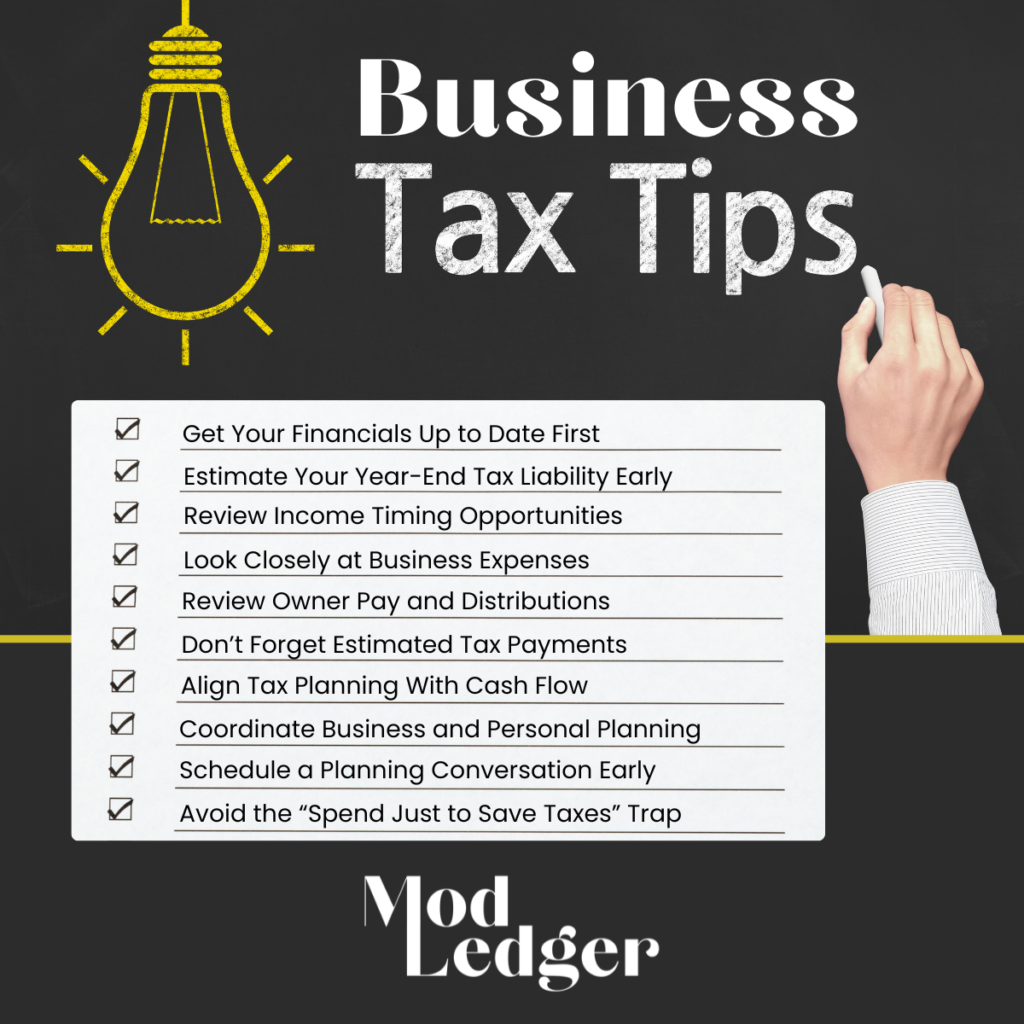
1. Get Your Financials Up to Date First
Effective tax planning tips for business owners starts with accurate numbers. If your books are behind, estimates are unreliable and decisions become guesswork.
Before diving into strategy:
- Reconcile bank and credit card accounts
- Review income and expenses year to date
- Correct miscategorized transactions
- Confirm payroll and sales tax records
Clean, current books allow you and your tax professional to project results and evaluate options confidently.
2. Estimate Your Year-End Tax Liability Early
One of the biggest tax planning tips for business owners stressors is not knowing how much they’ll owe. Estimating your tax liability before December provides clarity and time to respond. Even a rough projection is better than waiting until filing season.
Early estimates help you:
- Avoid unpleasant surprises
- Adjust cash reserves gradually
- Evaluate whether changes are needed
- Plan estimated payments accurately
3. Review Income Timing Opportunities
The timing of income can affect when taxes are owed. Depending on your accounting method and business structure, you may have some flexibility. These decisions should always align with cash flow needs, not just tax outcomes, but early planning gives you options.
Before December, consider:
- Whether income can be deferred or accelerated
- How invoicing timing impacts taxable income
- Whether customer payments are being collected efficiently
4. Look Closely at Business Expenses
Year-end is an ideal time to review expenses and determine whether planned purchases should happen before or after December 31.
Consider:
- Equipment or software purchases
- Professional services
- Training or education expenses
- Repairs or maintenance
Timing expenses intentionally can improve tax efficiency while supporting business needs. The key is to evaluate necessity and cash impact, not spend solely for tax reasons.
5. Review Owner Pay and Distributions
For many business owners, how and when they pay themselves has tax implications. Before December, review:
- Owner draws or distributions
- Payroll amounts (if applicable)
- Withholding levels
- Retirement contributions tied to compensation
Adjustments made earlier are easier to manage and less stressful than last-minute changes.
6. Don’t Forget Estimated Tax Payments
Missing or underpaying estimated taxes can lead to penalties and interest. Reviewing payments before December allows time to correct underpayments or plan for upcoming obligations.
Early review helps ensure:
- Payments align with current income levels
- Cash is set aside intentionally
- Compliance issues are addressed proactively
Waiting until January often limits flexibility.
7. Align Tax Planning With Cash Flow
Tax planning tips for business owners; savings on paper don’t help if cash isn’t available when payments are due. Before December, evaluate how tax decisions affect liquidity.
Ask questions like:
- Can the business comfortably support this expense now?
- Will this create a short-term cash strain?
- Are upcoming obligations already planned for?
Strong tax planning tips for business owners balances tax efficiency with operational stability.
8. Coordinate Business and Personal Planning
For many owners, business income flows directly into personal tax returns. Planning in isolation can create missed opportunities.
Before December, review:
- Personal income changes
- Other household deductions or credits
- Retirement contribution options
- Withholding versus estimated payments
Coordinating both sides leads to better overall results.
9. Schedule a Planning Conversation Early
Waiting until December often means limited availability and rushed decisions. Scheduling a planning discussion earlier in the fall gives time to explore scenarios and implement changes properly.
Early conversations:
- Improve the quality of advice
- Reduce last-minute pressure
- Allow for thoughtful decision-making
- Create a clearer action plan
Tax planning works best when it’s collaborative and unhurried.
10. Avoid the “Spend Just to Save Taxes” Trap
One of the most common mistakes is spending money unnecessarily just to reduce taxable income. While deductions matter, they should never override sound financial judgment.
A good rule of thumb:
- Spend when it supports business goals
- Plan when it improves outcomes
- Save taxes as a result, not the sole purpose
Intentional decisions outperform reactive ones every time.
Tax Planning Tips for Business Owners Before December Summary
Tax planning before December is about control. The earlier you start, the more options you have and the fewer surprises you face. Clean books, early projections, and thoughtful timing allow tax decisions to support both short-term stability and long-term growth.
By addressing tax planning before year-end, business owners shift from reacting to deadlines to making confident, strategic choices. That preparation doesn’t just reduce taxes, it reduces stress and supports better financial outcomes well into the next year.