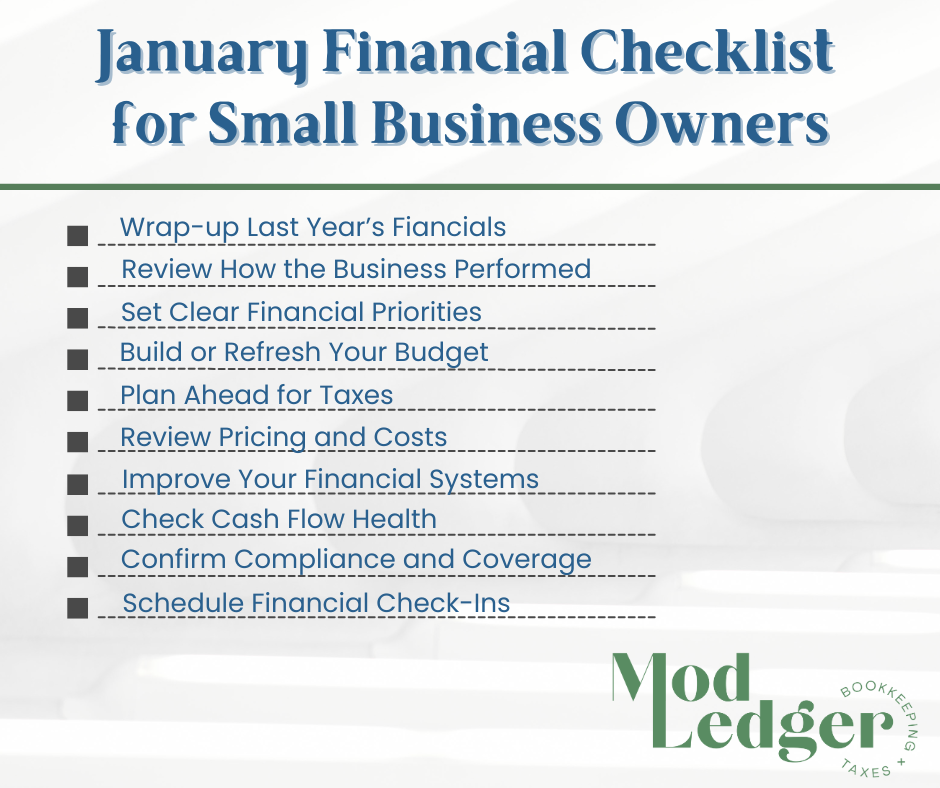
January Financial Checklist for Small Business Owners
A January Financial Checklist for Small Business Owners is a helpful list to get you started on the right track going into the new year. January is a fresh start and for small business owners, it’s the perfect time to bring clarity and structure to your finances. A few intentional steps early in the year can make everything else feel easier, from managing cash flow to preparing for taxes and making confident business decisions. This simple January financial checklist focuses on the essentials without unnecessary complexity or repetition. Think of it as a reset button for your business finances.
1. Wrap Up Last Year’s Financials
Before planning ahead, make sure last year is fully closed out. January is the best time to tidy up anything that was left unfinished.
Focus on:
- Reconciling bank and credit card accounts
- Categorizing uncoded expenses
- Reviewing outstanding invoices and bills
- Verifying loan balances
Accurate records give you a clean starting point and prevent confusion later in the year. If something doesn’t look right, now is the time to fix it.
2. Review How the Business Performed
Once your books are clean, step back and look at the big picture. You don’t need to analyze every number, just identify trends.
Pay attention to:
- Total revenue and net profit
- Major expense categories
- Seasonal highs and lows
- Cash flow patterns
This review helps you understand what supported growth and where adjustments may be needed.
3. Set Clear Financial Priorities
January is ideal for setting financial priorities that align with your business goals.
Examples include:
- Increasing monthly profit
- Paying down debt
- Improving cash reserves
- Hiring support or investing in tools
Choose a few priorities that matter most right now. Too many goals can create overwhelm, while focused goals create momentum.
4. Build or Refresh Your Budget
A budget helps you decide where your money should go instead of wondering where it went.
Your budget should:
- Reflect realistic income expectations
- Include fixed and variable expenses
- Account for savings and taxes
- Allow flexibility as the year progresses
Even a simple monthly budget provides structure and helps prevent overspending during slower periods.
5. Plan Ahead for Taxes
Tax planning doesn’t have to be stressful if it’s handled early and consistently.
In January:
- Estimate your annual tax obligation
- Set aside a percentage of income regularly
- Review quarterly estimated tax deadlines
- Organize key tax documents
Planning ahead with a January Financial Checklist for Small Business Owners keeps cash flow steady and removes surprises when deadlines approach.
6. Review Pricing and Costs
Costs tend to rise over time, and pricing that once worked may no longer support your goals.
Take time to:
- Review profit margins
- Identify expenses that have increased
- Evaluate whether pricing reflects current value
Small pricing adjustments or cost reductions can have a meaningful impact on profitability without increasing workload.
7. Improve Your Financial Systems
A January Financial Checklist is a great time to simplify how you manage money day to day.
Consider:
- Automating invoicing and payments
- Streamlining expense tracking
- Organizing digital receipts
- Scheduling regular bookkeeping reviews
Better systems save time, reduce errors, and make financial information easier to access when you need it.
8. Check Cash Flow Health
A business can be profitable and still struggle with cash flow. January is the right time to evaluate how and when money moves in and out.
Review:
- Average monthly inflows and outflows
- Client payment timelines
- Upcoming large expenses
If cash flow feels tight, adjusting payment terms or building a small reserve can create breathing room.
9. Confirm Compliance and Coverage
Start the year confident by confirming that:
- Licenses and permits are current
- Insurance coverage matches business needs
- Contracts and agreements are up to date
- Contractor and employee records are accurate
Staying compliant protects your business and reduces risk throughout the year.
10. Schedule Financial Check-Ins
Consistency is one of the most powerful financial habits you can build.
Schedule:
- Monthly bookkeeping reviews
- Quarterly financial check-ins
- A mid-year budget update
- Year-end planning
Short, regular reviews prevent small issues from turning into big problems.
January Financial Checklist: Final thoughts
A January Financial Checklist for Small Business Owners doesn’t require a financial overhaul, it requires attention. By taking simple, focused steps now, you create simplicity and control that last all year. You don’t have to tackle everything at once. Start with what matters most, build momentum, and let consistency do the rest. A thoughtful January sets the tone for a smoother, more confident year ahead for your small business!