What does an Accountant Need from me for Tax Season? 5 Must-Have Tips to Create a Smooth Tax Process!
The documents your accountant needs for tax season season doesn’t have to feel overwhelming. In fact, with a little preparation and the right documents in hand, it can be surprisingly smooth and even empowering!
What does an accountant need from me for tax season? Whether you’re filing as an individual or running a business, knowing what your accountant needs ahead of time saves you time, reduces stress, and helps ensure your return is accurate and optimized. Think of this as your friendly, no-pressure guide to getting tax-ready.
Why Having the Right Documents Matters
Your accountant’s job is to tell your financial story clearly and correctly. Missing or incomplete documents can slow the process, lead to follow-up requests, or even cause missed deductions or credits. When everything is organized from the start, your accountant can focus on strategy, not cleanup.
1. Personal Information to Have Ready
Every tax return starts with the basics. Be sure to provide:
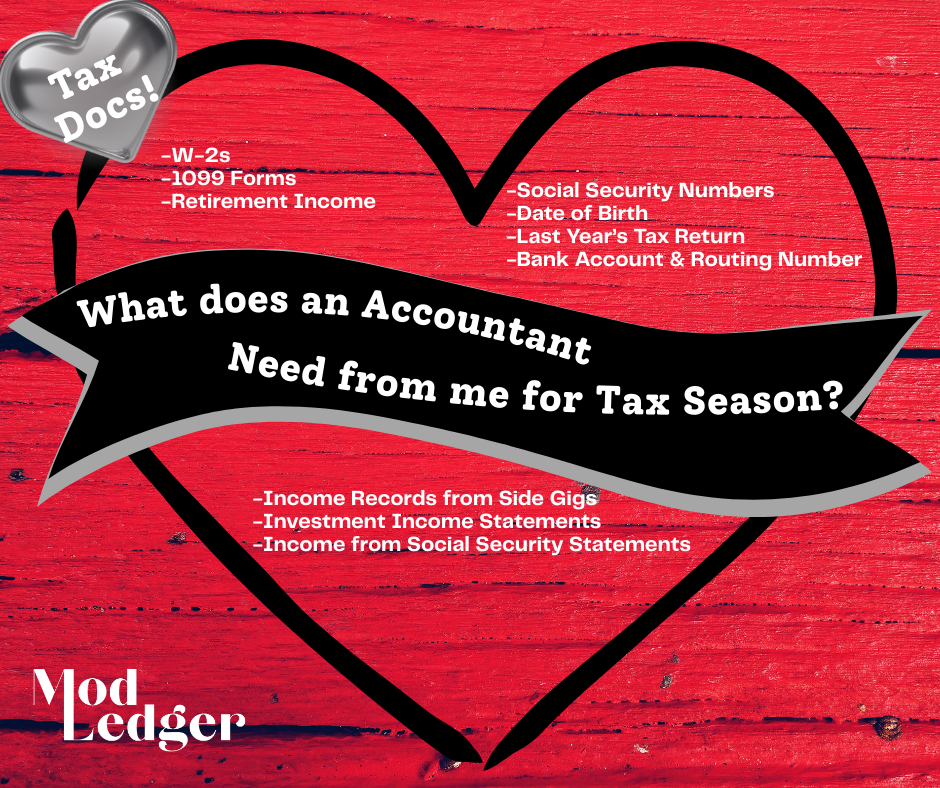
- Social Security Numbers (or ITINs) for you, your spouse, and dependents
- Dates of birth for all individuals on the return
- Last year’s tax return (helpful for reference and consistency)
- Bank account and routing numbers if you expect a refund
These details help your accountant verify your identity and ensure your return aligns with prior filings and Internal Revenue Service requirements.
2. Income Documents
What does an accountant need from me for tax season? This is where many people underestimate what’s needed. Be sure to gather all sources of income, including:
- W-2s from employers
- 1099 forms (NEC, MISC, INT, DIV, K, etc.)
- Records of freelance, side gig and any other self-employment income
- Investment income statements
- Retirement Income
- Income from Social Security Statements
If you earned it, it should be reported, even if you didn’t receive a form. Providing complete income records helps avoid tax notices, penalties, fees and the additional cost to process corrections later.
3. Expense and Deduction Records
This is where preparation really pays off. Common documents include:
- Receipts or summaries for charitable donations
- Mortgage interest statements and property tax records
- Medical expense totals (if applicable and larger than the annual IRS standard deduction for most folks)
- Education expenses and student loan interest statements
- Childcare expenses and provider information
Keep in mind that just because you have a record of something – like a donation to your favorite charity, it doesn’t mean it will be deductible. Providing the records allows the accountant to determine if you can though. Similar is true for medical expenses. The documents are only needed if it makes sense to itemize your deductions and for most the standard deduction is most beneficial.
For business owners, this also includes:
- Mileage logs
- Office expenses
- Software subscriptions
- Advertising and marketing costs
- Home office details (if applicable)
Organized expense records allow your accountant to identify deductions you might otherwise miss.
4. Business-Specific Documents
If you own a business, your accountant will also need:
- Profit and loss statement
- Balance sheet
- Payroll reports and payroll tax filings
- 1099s you’ve received
- Inventory records (if applicable)
Clean, up-to-date bookkeeping makes this step much easier and often less expensive.
5. Life Changes That Affect Your Taxes
Documents aren’t just numbers. Big life events matter too. Let your accountant know if you:
- Got married or divorced
- Had a child
- Bought or sold a home
- Started or closed a business
- Moved to a new state
Supporting documents related to these changes help ensure your return reflects your current situation accurately.
Stay Organized, The Simple Way.
What does an accountant need from me for tax season? Create a single folder, digital or physical, and add documents as they arrive. Many people wait until the last minute to figure out where the mail got stashed or what login they need for a tax form, but spreading this out to do as the documents come in makes tax season far less stressful.
The Bottom Line – What does an Accountant Need from me for Tax Season?
Tax season goes smoother when you’re prepared. Your accountant is a partner in the process, not a babysitter. When you provide complete, organized documents on time, you’re not just helping them work more efficiently, you’re setting yourself up for a clearer, more accurate return. Preparation reduces back-and-forth, minimizes last-minute stress, and gives you confidence that your numbers truly reflect your business. A little organization now leads to fewer surprises and a much calmer tax season overall.