

Understanding the W-9:
What It Is, Why It Matters, and When You Need It
Download a Fillable PDF W-9 Here
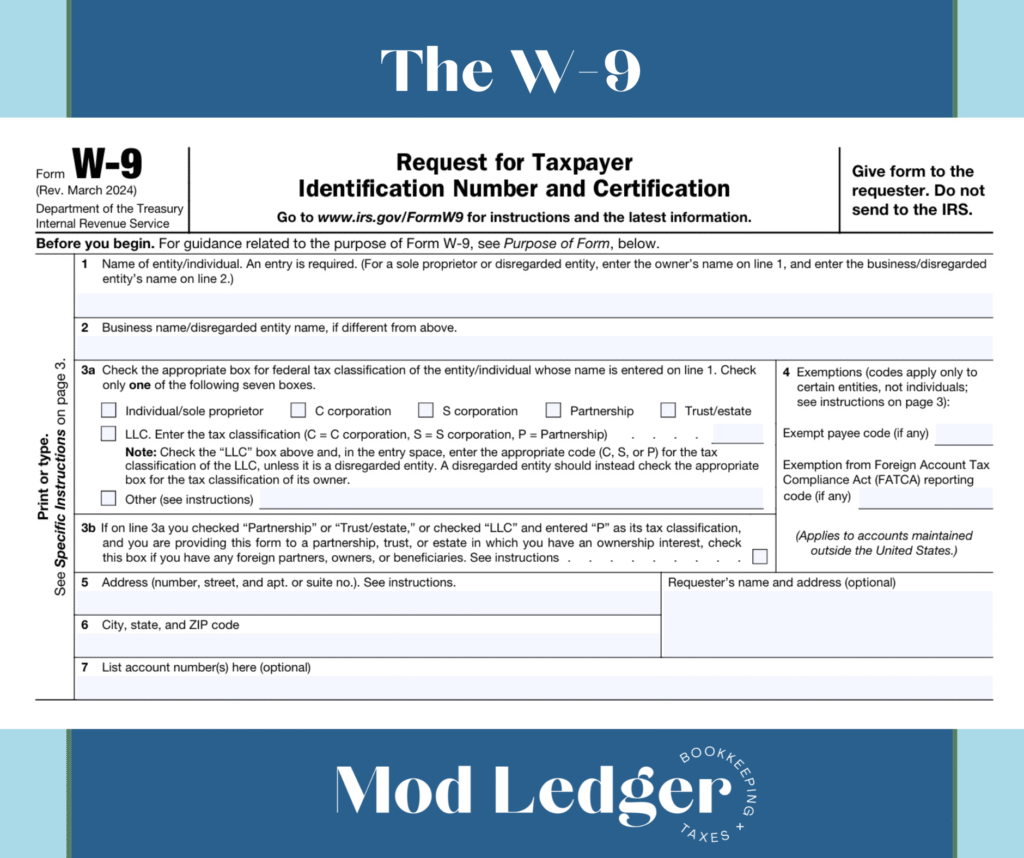
If you’ve ever been asked to fill out a Form W-9, you might have wondered “What is this form really for, and do I actually need to fill it out?”
Whether you’re a freelancer, contractor, or small business owner, understanding the W-9 is essential to staying compliant and avoiding tax headaches later on.
What is a W-9 Form?
The W-9, officially titled “Request for Taxpayer Identification Number and Certification”, is an IRS form used to collect important taxpayer information (similar to the W-4 form for payroll on a new job).
It Includes:
- Your name (or business name, if applicable)
- Tax classification (example: individual, LLC, S Corporation)
- Your Social Security Number (SSN) or Employer Identification Number (EIN)
If you have a EIN, don’t use your person SSN. - A signature certifying that the information is accurate.
Unlike other IRS forms, you don’t send the W-9 to the IRS yourself. Instead, you provide it to the individual or company that requested it.
Why is the W-9 Necessary?
The W-9 serves W-2 for people who work outside of W-2 employment. It helps businesses report how much they’ve paid you throughout the year, usually through a Form 1099-NEC. The IRS uses the W-9 information to match income reported by companies to the correct taxpayer.
Here’s why it matters:
-
Tax Reporting:
If a business pays you $600 or more in a calendar year (this amount may be increasing in the near future), they’re generally required to report those payments to the IRS and they need your W-9 info to do that correctly.
-
Avoid Penalties:
Failing to provide a W-9 when asked can lead to backup withholding, where the payer must withhold your payments and send it directly to the IRS.
-
Business Records:
Companies also use W-9s to keep accurate books and comply with tax laws.
When do You Need to Fill Out a W-9?
You’ll typically be asked to complete a W-9 form in any of these situations:
- You’re a freelancer, contractor, or gig worker providing services to a business.
- You’re a landlord receiving rental payments from a business tenant.
- You’re opening a new account with a financial institution (like a bank or investment firm).
- You’re receiving certain payments, like legal settlements or prize money.
Basically, if you’re receiving non-employee income, expect to be asked for a W-9 & expect to be sent a 1099 of some sort that must be filed with your income taxes.
W-9s Safety
Because W-9s include sensitive information, be careful when being asked to provide your information (& understand why others may be hesitant to provide their information if you’re the one asking for it):
- Only provide a W-9 to trusted sources who clearly explain why it’s needed.
- Never send your completed W-9 via unsecured email. Use encrypted file sharing or secure upload portals.
- If you’re unsure why someone is requesting a W-9, ask questions. It’s better to confirm with them, than to expose your data unnecessarily.
Many businesses have a standard procedure where they will not pay contractors/side gig workers until they return the completed W-9 form because they have to determine if they need your information to file the 1099 later on and need the information on your completed W-9 form to do so. Also, this is a good reason to not use your Social Security Number as your business/side gig ID. A EIN is a safer route to go, especially if you are sending multiple W-9s throughout the year.
The W-9 may seem like just another tax form, but it plays an important role in how income is tracked and reported. Filling it out accurately and knowing when it’s appropriate to share helps ensure you’re compliant, paid properly, and protected from tax issues down the road.